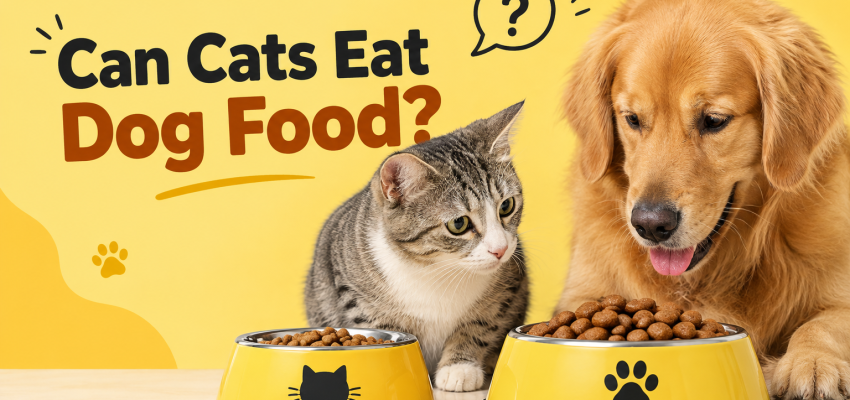

Can cats eat dog food? The Simple Answer is No but cats can usually eat a few bites of dog food without experiencing serious problems, but dog food is not nutritionally complete for cats. Cats have specific dietary requirements that dog food is not designed to meet. Regularly feeding dog food to a cat can lead to nutritional deficiencies and serious health problems over time.
If you have both cats and dogs at home, you may have noticed your cat investigating the dog’s food bowl. Although this behavior is common, sharing food regularly is not a good feeding practice. Cats need a diet formulated specifically for their species, age, and individual health needs.
In this guide, you’ll learn whether cats can eat dog food, what happens if they eat it regularly, how cat food differs from dog food, and how to prevent your cat from stealing your dog’s meals.
Can Cats Eat Dog Food Safely?
Cats can generally eat a small amount of ordinary dog food without experiencing toxicity or lasting harm. However, dog food should not replace a cat’s regular meals because it may not provide the nutrients cats need in the correct amounts.
The safety of dog food depends on how much your cat eats, how frequently it happens, and what ingredients the food contains.
Here is a quick breakdown:
- A few bites of dog food: Usually not a cause for concern in a healthy cat.
- One occasional meal: Generally unlikely to cause nutritional problems, although cat food should be provided as soon as possible.
- Dog food eaten regularly: Not recommended because it may not meet a cat’s nutritional requirements.
- Dog food as the only diet: Unsafe over the long term and potentially life-threatening because of nutritional deficiencies.
- Dog treats: Not automatically suitable for cats; ingredients and potential choking hazards should be considered.
If your cat steals a few pieces of dry dog food, there is usually no need to panic. Remove the remaining dog food, provide fresh water, and return to your cat’s normal diet.
However, contact a veterinarian if your cat develops repeated vomiting, diarrhea, unusual weakness, or other concerning symptoms. Seek advice promptly if your cat has eaten a product containing a potentially toxic ingredient.
Why Can’t Cats Eat Dog Food as Their Main Diet?
Cats and dogs have different nutritional requirements. Cats are obligate carnivores, meaning they depend on nutrients naturally found in animal tissues and require a carefully balanced diet formulated for feline health.
Dogs are more nutritionally flexible. They can obtain essential nutrients from a wider range of ingredients when their food is properly formulated.
Although some cat and dog foods contain similar ingredients, that does not mean they provide the same nutritional balance.
A food labeled complete and balanced for dogs is designed to meet canine nutritional requirements, not necessarily feline requirements. Even high-quality dog food may lack certain nutrients or contain insufficient amounts for cats.
Long-term feeding can therefore cause nutritional deficiencies, even when the dog food appears healthy and contains plenty of protein.
1. Cats Need Taurine in Their Diet
Taurine is an essential amino acid-like compound that cats must obtain through their food in adequate amounts. Cats cannot produce enough taurine to meet their needs without dietary sources.
Taurine supports several important functions, including:
- Normal heart muscle function.
- Healthy vision and retinal function.
- Reproductive health.
- Normal development and other essential bodily processes.
Many complete cat foods like smalls cat food are formulated with sufficient taurine for the intended life stage. Dog foods, however, are not necessarily formulated to meet feline taurine requirements.
A prolonged taurine deficiency can contribute to serious conditions, including dilated cardiomyopathy and retinal degeneration. This is one important reason dog food should not become a cat’s regular diet.
2. Cats Require Higher Protein Intake
Protein supplies amino acids that help maintain muscles, support tissue repair, and perform essential bodily functions.
Cats generally require a higher proportion of dietary protein than dogs. They also have specific amino acid requirements that must be met through their food.
Some dog foods contain substantial protein, but a high protein percentage alone does not establish that a food is suitable for cats. The overall nutrient profile matters just as much.
A cat eating dog food exclusively may receive insufficient protein or an inappropriate balance of essential nutrients, depending on the formulation.
3. Cats Need Preformed Vitamin A
Vitamin A supports normal vision, immune function, skin health, and other bodily processes.
Unlike dogs, cats cannot convert beta-carotene from plant ingredients into vitamin A efficiently enough to meet their nutritional needs. They therefore require an appropriate dietary source of preformed vitamin A.
Dog food is formulated around canine nutritional requirements, so it may not supply the amount or form needed to support a cat’s health.
A prolonged deficiency can cause serious health problems, making a complete feline diet essential.
4. Cats Need Arachidonic Acid
Arachidonic acid is an essential fatty acid involved in normal cellular function and other physiological processes.
Cats have limited ability to synthesize enough arachidonic acid to meet their needs, so they must obtain it from their diet.
Dogs can synthesize this fatty acid from other dietary fats more effectively. Consequently, dog food may not contain the amount required by cats.
5. Cats Need Adequate Niacin and Arginine
Niacin, also known as vitamin B3, supports energy metabolism and normal cellular function. Cats have a limited ability to produce sufficient niacin from tryptophan, so they depend on dietary sources.
Arginine is an essential amino acid for cats that supports the urea cycle, which helps the body process and eliminate nitrogen from protein metabolism.
An inadequate supply of arginine can cause serious problems in cats. A properly formulated feline diet supplies the necessary nutrients in appropriate amounts.
These differences demonstrate why dog food cannot be assumed to provide complete nutrition for cats, even when its ingredient list appears similar to that of cat food.
Cat Food vs. Dog Food: What’s the Difference?
Cat food and dog food may contain meat, grains, fats, vitamins, and minerals. However, their formulations differ according to the nutritional needs of each species.
| Feature | Cat Food | Dog Food |
| Intended species | Cats | Dogs |
| Protein requirements | Formulated for feline needs | Formulated for canine needs |
| Taurine | Adequate amounts in complete feline diets | Not necessarily sufficient for cats |
| Vitamin A | Meets feline requirements | Meets canine requirements |
| Arachidonic acid | Formulated to meet feline needs | Not necessarily sufficient for cats |
| Arginine | Meets feline requirements | Not necessarily sufficient for cats |
| Life-stage nutrition | Formulas may target kittens, adults, or other life stages | Formulas target canine life stages |
| Long-term suitability for cats | Appropriate when complete and balanced for the cat | Not appropriate as a regular replacement |
The exact nutritional composition varies by brand, recipe, and life stage. Some dog foods may contain individual nutrients that cats need, but this does not make the entire formulation suitable for feline feeding.
Is Wet Dog Food Safer Than Dry Dog Food for Cats?
Neither wet dog food nor dry dog food is automatically suitable as a regular cat diet.
Wet dog food may contain moisture that contributes to hydration, while dry dog food has a different texture and moisture content. However, neither format guarantees that the food meets feline nutritional requirements.
The important distinction is not whether the food is wet or dry. It is whether the food is formulated to provide complete and balanced nutrition for cats.
If your cat eats a small amount of either type, monitor for unusual symptoms and return to an appropriate feline diet.
What Happens If a Cat Eats Dog Food Regularly?
The consequences of regularly feeding dog food to a cat depend on the food’s nutritional composition, the cat’s age, and how long the unsuitable diet continues.
A single accidental meal is very different from feeding dog food every day for weeks or months.
Potential consequences include:
- Nutritional deficiencies: Inadequate amounts of essential amino acids, vitamins, fatty acids, or other nutrients can affect overall health.
- Heart problems: Prolonged taurine deficiency can contribute to dilated cardiomyopathy.
- Vision problems: Insufficient taurine can damage the retina and impair vision.
- Muscle loss: An inadequate supply of protein and essential amino acids can affect muscle maintenance.
- Poor skin and coat condition: Nutritional imbalances may contribute to changes in skin and coat health.
- Digestive upset: A sudden dietary change or an unsuitable food may cause vomiting, diarrhea, or reduced appetite in some cats.
These problems do not necessarily develop after every exposure. The main concern is that a dog food diet cannot be relied upon to provide all the nutrients a cat needs.
Can Kittens Eat Dog Food?
Kittens should not be fed dog food as their regular diet.
Growing kittens need a carefully balanced supply of energy, protein, essential amino acids, minerals, and vitamins to support development.
Dog food formulated for growth may still be intended for puppies rather than kittens. The two species have different nutritional requirements, so the food must be appropriate for the animal eating it.
If a kitten accidentally eats a few pieces of puppy food, this is not automatically an emergency. However, provide kitten-appropriate food for subsequent meals.
If a kitten has eaten a substantial amount, develops symptoms, or repeatedly refuses its normal food, consult a veterinarian.
Can Senior Cats Eat Dog Food?
Senior cats also need food formulated for feline nutritional requirements. Their individual needs may change with age, body condition, activity level, and medical history.
Some older cats need specific dietary adjustments to help manage health conditions. A veterinarian can recommend an appropriate food based on the cat’s circumstances.
For Senior Cats, Dog food is not a suitable substitute simply because a cat is older or less active.
Why Does My Cat Want to Eat Dog Food?
Cats may investigate a dog’s food for several reasons. The behavior does not necessarily mean they prefer dog food or that their current diet is inadequate.
Common explanations include:
Curiosity and Novelty
Cats often investigate unfamiliar smells, textures, and objects. A bowl belonging to another household pet may be especially interesting.
Smell and Flavor
Pet foods differ in their aromas, ingredients, textures, and fat content. A particular dog food may smell appealing to an individual cat.
Cats also perceive taste differently from dogs. Their interest in a food depends on more than sweetness or the number of taste buds they have.
Hunger or Competition
If your cat regularly tries to eat dog food, consider whether its normal meals are being offered in appropriate amounts and at suitable times.
Competition between pets can also encourage food stealing. A cat may approach the dog’s bowl because the food is available and the dog is eating it.
Learned Behavior
If stealing dog food consistently gives your cat access to an interesting meal, the behavior may become a habit.
To address it, manage access to the bowls and establish a predictable feeding routine rather than relying on the cat to ignore the dog food.
Can Cats Eat Dog Treats?
Cats should not routinely receive dog treats as a substitute for cat treats. Dog treats vary considerably in ingredients, texture, size, and nutritional composition.
A small piece of a plain treat may be tolerated by some cats, but suitability depends on the specific product.
Before offering a dog treat, consider these factors:
- Ingredients: Check for ingredients that may be harmful to cats, including onion or garlic in unsafe forms or amounts.
- Size and texture: Large, hard, or unusually shaped treats may present a choking risk.
- Nutritional suitability: Dog treats are not necessarily formulated for feline nutritional needs.
- Calories: Frequent treats can contribute to excess calorie intake and weight gain.
Treats should make up only a small portion of a cat’s overall calorie intake. Cat-specific treats are generally the more appropriate choice.
If you are uncertain about a product’s ingredients or safety, ask your veterinarian before giving it to your cat.
How to Stop Your Cat From Eating Dog Food
Preventing food stealing is easier when each pet has a separate feeding routine. You do not necessarily need to change your pets’ diets if both are already eating appropriate foods.
1. Feed Your Cat and Dog in Separate Rooms
Separate feeding spaces reduce competition and make it easier to control which pet eats which food.
Close a door or use a suitable barrier during mealtimes if necessary. Ensure both pets have a calm environment where they can eat without interference.
2. Establish Regular Feeding Times
Offer meals at predictable times that suit your pets’ needs.
After mealtime, remove uneaten food when appropriate so that the dog bowl does not remain available for your cat to investigate.
If either pet requires frequent meals or has a medical condition affecting its feeding schedule, follow the veterinarian’s recommendations.
3. Store Dog Food Securely
Keep dry food, wet food, and treats in containers or cupboards that your cat cannot access.
Do not leave open bags on the floor or unattended bowls within easy reach. Secure storage helps prevent both food stealing and accidental overeating.
4. Provide Appropriate Cat Food
Choose a complete and balanced cat food that suits your pet’s life stage and individual needs.
If your cat regularly refuses its own food but eats dog food, consider factors such as food freshness, texture, feeding environment, and recent dietary changes.
A persistent loss of appetite should not be dismissed as pickiness. Cats that stop eating or show changes in eating habits may need veterinary assessment.
5. Monitor Both Pets During Meals
Watch your pets when they eat, particularly if one frequently approaches the other’s bowl.
Reward calm behavior and redirect your cat toward its own feeding area. Avoid punishment, which may increase stress without addressing the reason for food stealing.
Consistency is important. Every household member should follow the same feeding routine.
What Should You Do If Your Cat Accidentally Eats Dog Food?
If your cat has eaten dog food, the first step is to determine how much it consumed and whether the product contains any potentially harmful ingredients.
Follow these steps:
- Remove the dog food: Prevent your cat from eating more.
- Check the packaging: Review the ingredient list and confirm that the food is an ordinary dog food rather than a product containing additional ingredients or supplements.
- Observe your cat: Watch for vomiting, diarrhea, unusual tiredness, or other changes in behavior.
- Provide normal cat food: Offer the appropriate feline diet at the next meal if your cat is acting normally.
- Contact a veterinarian when necessary: Seek advice if your cat has eaten a large amount, has an underlying health condition, develops symptoms, or may have consumed a toxic ingredient.
Do not induce vomiting or give home remedies unless a veterinarian specifically instructs you to do so.
Most healthy cats will not develop lasting problems after eating a few pieces of ordinary dog food. Nevertheless, the circumstances matter, and concerning symptoms should always be taken seriously.
How to Choose the Right Food for Your Cat
Selecting an appropriate food helps ensure your cat receives the nutrients it needs throughout life.
When comparing cat foods, consider the following factors:
- Nutritional adequacy: Look for a statement indicating that the food is complete and balanced for the appropriate feline life stage.
- Age: Kittens, adult cats, and senior cats may have different nutritional needs.
- Health requirements: Cats with specific medical conditions may require a veterinarian-recommended diet.
- Food format: Wet, dry, or a combination may work depending on your cat’s needs and preferences.
- Palatability: A nutritionally appropriate food must also be acceptable to your cat.
- Feeding instructions: Follow the product’s feeding guidance and adjust portions according to your cat’s body condition and veterinary advice.
A more expensive food is not automatically better for every cat. The priority is a nutritionally appropriate, complete diet that suits the individual animal.
If you are comparing feline food brands or recipes, evaluate their nutritional adequacy, ingredients, feeding instructions, and suitability for your cat rather than relying on marketing claims alone.
Frequently Asked Questions
Can cats eat dog food once?
No but Most healthy cats can eat a small amount of ordinary dog food once without serious consequences. Return to your cat’s normal diet afterward, and seek veterinary advice if symptoms develop or the food contains a potentially harmful ingredient.
Can cats eat dog food every day?
No. Dog food should not be a cat’s everyday diet because it is formulated to meet canine rather than feline nutritional requirements. Regular feeding may result in nutrient deficiencies and health problems.
Can cats eat dry dog food?
A few pieces of dry dog food are generally unlikely to harm a healthy cat. However, dry dog food is not a suitable long-term replacement for complete and balanced cat food.
Can cats eat wet dog food?
Wet dog food is not automatically toxic to cats, but it may not provide the nutrients they need in the correct amounts. It should not replace a cat’s regular diet.
Can kittens eat puppy food?
Kittens should not be fed puppy food as their main diet. Kittens require nutrition formulated for feline growth and development. Ask a veterinarian if you need help choosing an appropriate kitten food.
Is dog food poisonous to cats?
Ordinary dog food is not generally poisonous to cats simply because it is made for dogs. The main concern is nutritional inadequacy when it replaces cat food. However, specific ingredients or unusual products may present separate risks.
Can cats eat dog treats?
Dog treats are not automatically suitable for cats. Check the ingredients, size, texture, and safety of the specific product. Cat-specific treats are generally the better option.
What happens if a cat eats dog food for a week?
The outcome depends on the amount consumed, the dog’s food formulation, and the cat’s health. A few accidental bites are different from relying on dog food for every meal. If your cat has been eating only dog food for several days, contact a veterinarian for advice on returning to an appropriate feline diet.
Why does my cat keep eating the dog’s food?
Your cat may be curious, attracted to the smell, hungry, or motivated by competition. Separate feeding areas, scheduled meals, and secure food storage can help prevent the behavior.
Can cats survive on dog food?
A cat might survive for some time while eating dog food, but survival does not mean the diet is nutritionally adequate. Long-term feeding can cause serious deficiencies. Cats need a complete and balanced diet formulated for their species.
Final Thoughts: Can Cats Eat Dog Food?
Cats can usually tolerate a few bites of ordinary dog food, but cats should not eat dog food as their regular diet. Their bodies require specific nutrients, including taurine, appropriate protein levels, preformed vitamin A, arachidonic acid, and arginine, in amounts that dog food is not necessarily designed to provide.
If your cat occasionally steals food from the dog’s bowl, remove access and return to normal feline meals. If dog food has become a regular part of your cat’s diet, seek veterinary guidance to ensure its nutritional needs are being met.
The simplest approach is to feed each pet a complete, balanced diet formulated for its species and life stage. Separate feeding spaces and consistent mealtimes can help keep both cats and dogs healthy.