
If you are considering Smalls for your cat, you may wonder how the service works, how the food arrives, and what you need to do before serving it. Understanding the process can help you decide whether Smalls fits your cat’s dietary needs and your daily routine.
Smalls offers fresh frozen cat food, freeze-dried products, and other cat food options. Its fresh food is gently cooked, frozen to maintain freshness, and shipped to customers. Once your order arrives, you store the food according to its instructions, thaw fresh food before mealtime, and serve portions based on your cat’s needs.
This guide explains how Smalls Cat Food works, how to order and prepare it, how much to feed your cat, and how to introduce it to your cat’s routine.
How Does Smalls Cat Food Work?
Smalls combines cat food products with a delivery service designed to make cat feeding more convenient. The process generally involves selecting a suitable plan, receiving your food, storing it correctly, and serving the recommended portions.
Here is how it works:
- Choose a plan: Visit the Smalls website and complete its questionnaire to provide information about your cat and explore available options.
- Receive your order: Your selected products are shipped to your address according to your order and delivery schedule.
- Store the food: Place fresh frozen packets in the freezer and follow the package instructions for other products.
- Prepare a meal: Thaw fresh food in the refrigerator before serving. Other product types may have different preparation requirements.
- Serve the right portion: Use the feeding guidance for your specific product and your cat’s individual needs.
- Manage future deliveries: Review your account and delivery schedule to manage your subscription and upcoming orders.
Smalls fresh food is gently cooked rather than served raw. It is then frozen and shipped, so you do not need to cook it again before feeding it to your cat.
What Types of Smalls Cat Food Are Available?
Smalls offers several cat product formats, and knowing which one you have is important because preparation and storage instructions differ.
Fresh frozen cat food
Smalls fresh food is supplied frozen and needs to be thawed before serving. Keep packets in the freezer until needed, then move the next packet into the refrigerator ahead of mealtime.
This format requires some planning because you need to allow time for thawing.
Freeze-dried Puffs
Smalls also offers freeze-dried products. Their storage and feeding instructions differ from those for fresh frozen food, so check the package to determine whether the product should be served dry or prepared another way.
Do not apply fresh-food thawing instructions to freeze-dried products.
Broth and other products
Smalls broth and other supplementary products have their own storage and serving instructions. Check the label to understand how to store an unopened product, what to do after opening it, and how to serve it appropriately.
How to Prepare Smalls Cat Food
Preparing Smalls fresh food is straightforward once you establish a routine.
Step 1: Thaw the packet
Move a frozen packet into the refrigerator approximately 24 hours before you plan to serve it. Smalls recommends thawing its fresh food on a refrigerator shelf where the temperature stays at or below 40°F.
Avoid using the refrigerator door because its temperature can fluctuate.
Step 2: Check the packet
Before serving, make sure the food has thawed appropriately and follow the package instructions. If a delivery arrives with packets that are at room temperature or warmer, Smalls advises that they should not be frozen or fed to your cat. Contact the company for assistance.
Step 3: Measure the portion
Review the feeding guide for your exact product and determine the amount your cat needs. Your cat’s daily portion may be divided into multiple meals.
Step 4: Serve the food
Place the appropriate portion in a clean bowl. If you have unused food, store it according to the product’s instructions rather than leaving it uncovered.
If you use freeze-dried products, follow their specific preparation instructions instead of assuming they need to be thawed.
How to Feed Smalls Cat Food
The right amount depends on your cat’s weight, age, activity, body condition, health, and any other food or treats they consume.
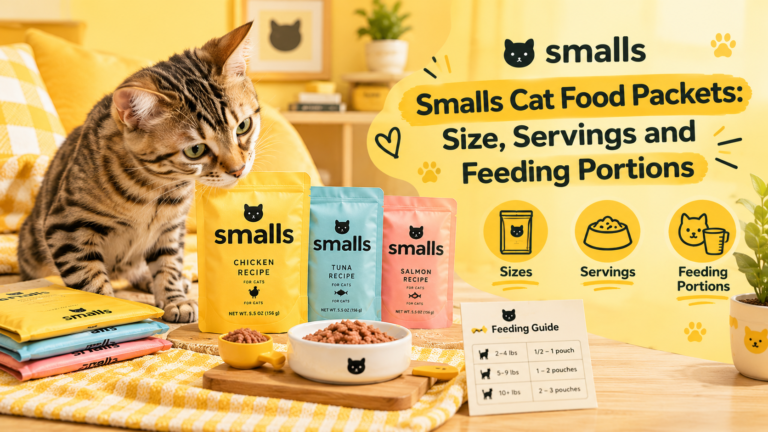
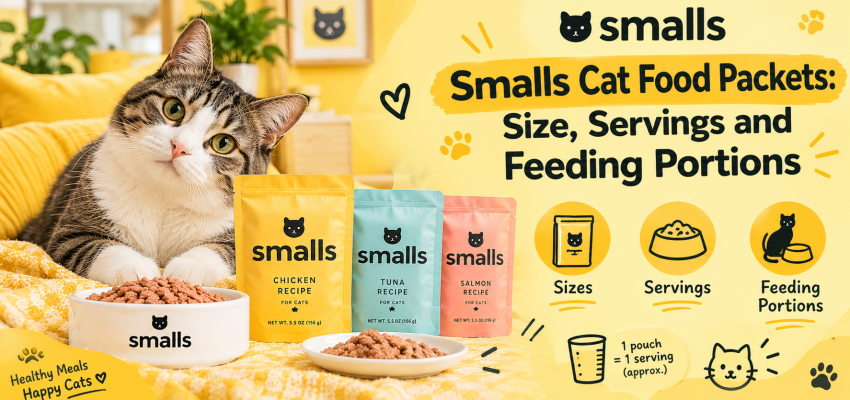
Smalls provides feeding guidelines to help you estimate daily portions. For adult cats at their goal weight, its published guide recommends approximately one 200-calorie fresh-food packet per day for every 10 pounds of body weight. The daily amount should be divided into two or more meals.
This is a starting guideline, not a universal feeding prescription. Kittens, pregnant or nursing cats, and cats that need to gain or lose weight may have different calorie requirements.
To establish a feeding routine:
- Check the feeding recommendations for your specific Smalls product.
- Consider your cat’s goal weight and individual needs.
- Divide the daily amount into suitable meals.
- Monitor your cat’s appetite, weight, and body condition.
- Consult your veterinarian if you need to adjust portions or change your cat’s diet for a health reason.
Avoid choosing a portion based on packet count alone. The product’s calorie content and your cat’s needs are more important than simply counting packets.
How to Serve Smalls Cat Food
Some cats prefer food at a particular temperature or texture. Serving Smalls in a clean bowl and maintaining a consistent mealtime routine can make the experience easier.
If your cat does not enjoy food straight from the refrigerator, Smalls suggests gently warming it to bring out the aroma.
Its transition guidance recommends placing a packet in a bowl of warm water for three to five minutes. Alternatively, it suggests transferring the food to a microwave-safe dish, microwaving it for about five seconds, mixing it, and repeating briefly if needed.
Always mix thoroughly and check the temperature before serving. Microwaves can create hot spots, and food should never be hot enough to burn your cat’s mouth.
Follow the instructions for the specific product and any serving container you use.
How to Introduce Smalls to Your Cat
A cat may accept a new food immediately, or it may need time to become comfortable with the smell, texture, and taste. A gradual transition can make the change easier.
Start with one familiar recipe
If possible, begin with a protein your cat already enjoys. Introducing one recipe at a time can make it easier to understand which options your cat prefers.
Offer a small amount
Mix a small amount of Smalls into your cat’s familiar food, or offer the two foods in separate bowls. Separate bowls let your cat investigate the new food without requiring an immediate switch.
Introduce new recipes gradually
Once your cat is eating a recipe comfortably, introduce another option if you want to explore different varieties. Avoid changing several recipes in the same meal while your cat is adjusting.
Maintain a consistent routine
Keep feeding times and the surrounding environment as consistent as possible. Some cats need several attempts before accepting a new food, so patience is important.
Smalls recommends gradually phasing out the old food over approximately three to four days once your cat is eating the new recipe consistently. However, some cats may need a slower transition. Consult your veterinarian if your cat has a medical condition, develops digestive problems, or stops eating.
How to Store Smalls Cat Food After Opening
Storage is an important part of understanding how Smalls Cat Food works.
Fresh frozen packets should remain in the freezer until needed. Once a packet is thawed, Smalls says fresh food can last up to five days in a sealed container or bag in the refrigerator.
Other products have different requirements. For example, Smalls broth can be stored in the pantry before opening and should be refrigerated after opening. Freeze-dried products should be kept according to their package instructions.
Always check the label for the correct storage period and handling instructions.
For more detailed instructions, read our guide on how to store Smalls Cat Food.
Common Mistakes to Avoid When Feeding Smalls
Serving frozen food without proper preparation
Plan ahead and follow the thawing instructions instead of trying to rush the process.
Guessing how much your cat needs
Use the feeding guide as a starting point and consider your cat’s individual calorie requirements.
Switching foods too quickly
Introduce the new food gradually when possible, especially if your cat is hesitant about unfamiliar recipes.
Warming food without checking its temperature
Mix warmed food thoroughly and check it before serving to prevent burns from hot spots.
Ignoring product-specific storage instructions
Fresh frozen food, freeze-dried products, and broth do not all have the same storage requirements.
Changing food when your cat has a medical concern without advice
If your cat has a health condition or a history of food-related problems, consult your veterinarian before making a dietary change.
Frequently Asked Questions
How does Smalls Cat Food work?
Smalls offers cat food products and a delivery service. You choose suitable products or a plan, receive your order, store the food according to its instructions, and serve the appropriate portions. Fresh frozen food needs to be thawed before serving.
Do I need to cook Smalls fresh food before serving it?
No additional cooking is generally needed for Smalls fresh food. The brand describes its fresh recipes as gently cooked before being frozen and shipped. Follow the instructions for your particular product.
How long does Smalls Cat Food take to thaw?
Smalls recommends placing a fresh frozen packet in the refrigerator approximately 24 hours before mealtime. The exact time may vary, so check that the packet has thawed appropriately.
How much Smalls Cat Food should I feed my cat?
Smalls’ published adult feeding guide uses approximately one 200-calorie fresh-food packet daily for every 10 pounds of goal body weight. Actual needs vary by age, health, activity, and other food consumed. Use the product’s feeding guide and ask your veterinarian for individualized advice.
Can I divide a Smalls packet between multiple meals?
Yes. Smalls recommends dividing the daily fresh-food amount into two or more meals. Store unused food according to the package instructions.
What should I do if my cat refuses Smalls?
Try offering a small amount alongside familiar food, start with a familiar protein, and introduce new recipes one at a time. Give your cat time to adjust. If your cat stops eating or shows signs of illness, contact your veterinarian.
Does Smalls Cat Food need to be refrigerated?
Fresh frozen food should be stored in the freezer until needed and thawed in the refrigerator. Other Smalls products may have different storage requirements, so check the packaging.
Final Thoughts
Understanding how Smalls Cat Food works helps you plan feeding times, manage deliveries, and prepare meals confidently. Choose the appropriate product, store it correctly, thaw fresh food in advance, and use the feeding guide to estimate suitable portions.
Introduce new food gradually and monitor your cat’s appetite and body condition. With a consistent routine and the correct product instructions, you can determine whether Smalls fits your cat’s needs and your feeding schedule.