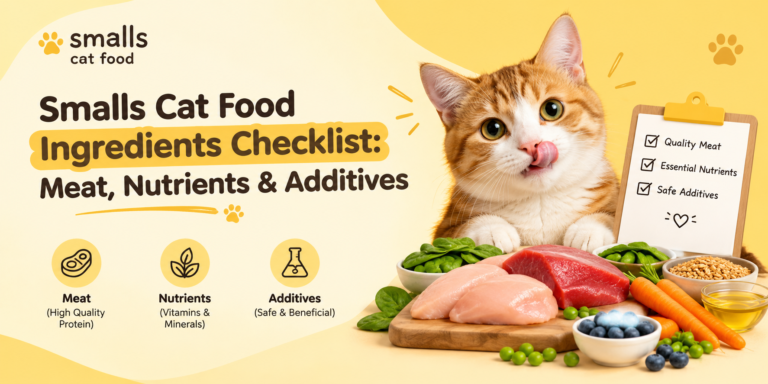
Choosing cat food involves more than comparing flavors or prices. Cat owners also need to understand the meat sources, essential nutrients, added ingredients, and nutritional value of each recipe. Smalls cat food ingredients vary by formula, but the brand’s range includes animal proteins, organ meats, vegetables, fats and oils, vitamins, minerals, and other nutrients.
Smalls offers gently cooked fresh cat food made with ingredients such as chicken, turkey, pork, beef, salmon, and cod. It also sells freeze-dried products with different ingredient lists and moisture levels. According to Smalls, its fresh food is prepared in human-grade, USDA-certified facilities, gently cooked, and frozen to preserve freshness.
The key is to evaluate each recipe individually. A food’s ingredient list can tell you what goes into the formula, while its guaranteed analysis and nutritional adequacy statement help you assess its nutritional profile.
This guide explains the main Smalls cat food ingredients, provides a practical checklist, compares example recipes, and answers common questions about meat, nutrients, additives, and food sensitivities.
What Ingredients Are Main in Smalls Cat Food?
The main ingredients in Smalls cat food are named animal proteins, organ meats, and supporting ingredients that help provide a complete feline diet. The exact combination depends on the recipe and product type.
Smalls identifies several whole-protein sources across its range, including chicken, turkey, beef, pork, cod, and salmon. Individual formulas may also contain ingredients such as green beans, kale, pumpkin, oils, yeast, taurine, vitamins, and minerals.
Here is what these ingredient groups do:
- Animal meat: Supplies protein and amino acids needed for normal feline body functions.
- Organ meats: Ingredients such as chicken liver and beef liver provide protein and naturally occurring nutrients.
- Vegetables and greens: Ingredients such as green beans, kale, and pumpkin may contribute fiber and other nutrients.
- Fats and oils: Supply energy and fatty acids.
- Vitamins and minerals: Help meet essential nutritional requirements.
- Taurine: An essential nutrient for cats that supports normal vision, heart function, and other biological processes.
Not every Smalls recipe contains all these ingredients. For example, a chicken-based formula may contain chicken liver, while a fish-based formula may use salmon and cod.
Smalls Cat Food Ingredients Checklist
Use this checklist to evaluate a Smalls recipe before buying it. It covers the ingredients themselves and the additional information needed to understand the food’s nutritional value.
Complete Ingredient Checklist
- Primary protein: Identify the meat or fish listed on the product label.
- Organ meats: Check whether the recipe includes liver or other organ ingredients.
- Additional animal ingredients: Look for other meats, fish, or animal-derived ingredients.
- Vegetables and greens: Identify ingredients such as green beans, kale, or pumpkin where present.
- Fats and oils: Review ingredients such as sunflower oil or fish-derived oils.
- Taurine: Check the ingredient list for this essential feline nutrient.
- Vitamins: Review the listed vitamin supplements.
- Minerals: Look for added mineral compounds and supplements.
- Guaranteed analysis: Review protein, fat, fiber, moisture, and other declared values.
- Calories: Check the energy content to help determine appropriate portions.
- Nutritional adequacy: Confirm whether the product is complete and balanced for your cat’s life stage.
- Potential allergens: Check for ingredients your cat needs to avoid.
- Storage instructions: Follow the product’s freezing, refrigeration, and handling directions.
Which Ingredients Should You Check First?
Start with the main protein source and the complete ingredient list. Then review the guaranteed analysis, calorie content, and nutritional adequacy statement.
The ingredient order is useful, but it does not tell the whole story. Ingredients are generally listed by weight before processing, and moisture differences can affect how foods compare.
For example, fresh food naturally contains more water than freeze-dried food. Comparing their protein percentages without accounting for moisture can therefore give a misleading impression of their relative protein concentration.
Remember: A good ingredient checklist is a starting point, not proof that a recipe meets every nutritional requirement. The complete formula and its nutritional adequacy statement matter more than any single ingredient.
What Types of Meat Do Smalls Cat Food Use?
Smalls uses several animal protein sources across its product range. These include chicken, turkey, beef, pork, and fish such as salmon and cod.
Different proteins can provide different amino acid profiles, flavors, and textures. However, the presence of a particular meat does not automatically make a recipe better or more suitable for every cat.
Chicken Ingredients in Smalls Cat Food
Chicken is a protein source used in Smalls fresh food recipes. A published ingredient analysis of its Smooth Bird recipe lists chicken and chicken liver as the first two ingredients, followed by ingredients including green beans, water, dried yeast, kale, and nutritional supplements.
Chicken supplies protein and essential amino acids. Chicken liver also provides naturally occurring nutrients, while the complete formula supplies additional vitamins and minerals as needed.
When reviewing a chicken recipe, check whether it contains other animal-derived ingredients, particularly if your cat has a suspected food allergy.
Turkey Ingredients in Smalls Cat Food
Turkey is another protein used in selected Smalls recipes. Its ingredient profile differs from chicken-based formulas and may include ingredients such as green beans, kale, oils, yeast, taurine, and vitamin and mineral supplements.
Turkey provides animal protein, but a turkey recipe is not automatically hypoallergenic. Cats can develop sensitivities to different proteins, and a food’s suitability depends on the individual cat.
If your cat has recurring digestive problems or skin irritation, ask your veterinarian whether a controlled elimination diet is appropriate.
Beef Ingredients in Smalls Cat Food
Selected Smalls recipes use beef and beef liver. For example, a published ingredient analysis of its Ground Cow recipe lists beef, beef liver, green beans, spinach, water, dried yeast, and other ingredients.
Beef supplies protein, while beef liver contributes protein and naturally occurring micronutrients. The complete formula also contains supporting ingredients and nutritional supplements.
When comparing beef recipes, check their calorie content and fat levels alongside the ingredient list. These factors can help you select a food that fits your cat’s individual energy needs.
Fish and Other Protein Sources
Smalls also offers fish-based and combined-protein recipes, depending on its current range. Salmon and cod appear in selected fish formulas, while pork is used in other recipes.
A published ingredient analysis of Smooth Fish lists salmon and cod as the first two ingredients, followed by green beans, pumpkin, dried yeast, oils, and nutritional supplements.
Fish meat and fish-derived oils are not interchangeable. Fish can supply protein, while fish oils may provide specific fatty acids. Their exact nutritional contributions depend on the ingredient and amount used.
Check the complete product label if your cat needs to avoid a particular protein. A recipe’s marketing name may not disclose every animal-derived ingredient.
What Nutrients Do Smalls Cat Food Ingredients Provide?
Smalls cat food ingredients serve different nutritional purposes. Animal proteins supply amino acids, fats provide concentrated energy, and vitamins and minerals help maintain normal body functions.
The nutritional value of a recipe depends on the balance of the complete formula rather than the presence of one impressive-sounding ingredient.
Protein for Muscle Maintenance
Protein supplies amino acids that cats need to maintain muscles, repair tissues, and support normal biological functions.
Chicken, turkey, beef, pork, and fish can all contribute protein when included in a properly formulated cat food.
When comparing recipes, review the guaranteed analysis and consider the food’s moisture content. Protein percentages on an as-fed basis can be difficult to compare directly between fresh and freeze-dried foods.
Fats for Energy and Healthy Skin
Dietary fat provides concentrated energy and essential fatty acids. It also helps cats absorb fat-soluble vitamins.
Depending on the formula, Smalls recipes may contain fats from animal ingredients or added oils. The type and amount can differ across products.
Fat is an important part of feline nutrition, but calorie requirements vary. If your cat needs to lose weight or maintain a specific body condition, check the calorie content and feeding recommendations instead of judging a recipe by its fat percentage alone.
Vitamins and Minerals for Overall Health
Vitamins and minerals support normal metabolism, bone maintenance, nervous system function, and other biological processes.
Smalls ingredient lists may include vitamin supplements, mineral compounds, and other nutritional ingredients. Their exact forms and quantities depend on the formula.
Added vitamins and minerals are not automatically undesirable. Complete cat foods often need carefully balanced nutrients to meet feline requirements.
The important question is whether the finished food provides the appropriate amounts of essential nutrients for the intended life stage.
Taurine for Essential Feline Nutrition
Taurine is an essential nutrient for cats. Adequate taurine intake supports normal vision, heart function, reproduction, and other biological processes.
Taurine appears on published ingredient lists for selected Smalls recipes. However, its presence alone does not prove that a food is complete and balanced.
Check the product’s nutritional adequacy statement and feeding instructions. For kittens, pregnant cats, and cats with medical conditions, confirm that the product is appropriate for their needs.
Smalls Cat Food Ingredients: Example Recipe Comparison
Comparing individual recipes provides more useful information than relying on a general list of ingredients used across the brand.
The following table uses examples from published recipe-level ingredient analyses. Formulas and product availability can change, so verify the current packaging before purchasing.
| Recipe example | Main ingredients reported | What to check |
| Smooth Bird | Chicken, chicken liver | Other ingredients, calories, moisture, and nutrient balance |
| Smooth Fish | Salmon, cod | Whether the recipe contains other animal-derived ingredients |
| Ground Cow | Beef, beef liver | Fat content, calorie density, and nutritional adequacy |
| Freeze-Dried Puffy Bird | Chicken, chicken liver, ground bone | Moisture, intended feeding use, and complete-diet status |
What Does This Comparison Tell You?
The first two ingredients can help you identify the main animal protein sources, but they do not establish the entire nutritional quality of a recipe.
The supporting ingredients matter too. Vegetables, oils, yeast, vitamins, minerals, and taurine can contribute to the formula’s nutritional profile.
The freeze-dried example also illustrates why product type matters. Freeze-dried food generally contains much less moisture than fresh food, so its as-fed nutrient percentages and feeding instructions may differ substantially.
Do not compare protein percentages across product types without accounting for moisture. If you need a precise comparison, use verified guaranteed analysis values and calculate the dry matter basis consistently.
Are Smalls Cat Food Ingredients Safe and Healthy for Cats?
Smalls says its fresh food is gently cooked and frozen, and it describes manufacturing procedures designed to reduce harmful pathogens. Its published safety guide also describes a cooking process for fresh food and a separate drying and pasteurization process for freeze-dried products.
These procedures are relevant to food safety, but they do not guarantee that every recipe is suitable for every cat.
A product’s suitability depends on its nutritional completeness, ingredients, handling, your cat’s life stage, and any individual health concerns.
Potential Benefits of Smalls Cat Food Ingredients
Depending on the recipe, potential benefits include:
- Animal-based protein: Supplies amino acids for normal body functions.
- Moisture in fresh food: Can contribute to daily water intake.
- Dietary fats: Provide energy and essential fatty acids.
- Vitamins and minerals: Help meet nutritional requirements when properly balanced.
- Different protein options: Give owners choices when selecting a recipe their cat tolerates and accepts.
These are potential nutritional benefits, not guarantees that a specific product will improve digestion, skin condition, energy, or lifespan.
Are There Ingredients to Consider for Cats With Allergies?
Yes. Cats can have food allergies or intolerances to particular ingredients, including specific animal proteins.
Before choosing a formula, review all meats, organ ingredients, and other components. Also check the manufacturer’s guidance about cross-contact if strict ingredient avoidance is necessary.
If your cat experiences recurring itching, vomiting, diarrhea, or other concerning symptoms, consult a veterinarian. These signs can have several causes and should not automatically be attributed to food.
For a suspected food allergy, a veterinarian may recommend a controlled elimination diet rather than simply switching to another protein.
How Can You Tell Whether a Recipe Is Nutritionally Complete?
Check the nutritional adequacy statement on the packaging or official product information. It should identify whether the food is formulated to be complete and balanced for a particular life stage or intended for another purpose.
Also review the calorie content, feeding directions, and any relevant veterinary advice.
Cats with kidney disease, urinary problems, diabetes, digestive disorders, or other medical conditions may require a specially tailored diet. Ask your veterinarian before changing their food.
Smalls Cat Food Ingredients by Recipe Type
Smalls fresh and freeze-dried products differ in preparation, moisture content, and potentially their ingredients. A fresh food ingredient list should not be assumed to apply to a freeze-dried formula.
Fresh Cat Food Ingredients
Smalls fresh recipes are gently cooked and frozen. Depending on the formula, ingredients may include named meats, organ meats, vegetables, oils, vitamins, and minerals. Fresh food contains substantial moisture, which can contribute to a cat’s total daily water intake. Cats should still have access to clean drinking water.
To assess a fresh recipe, check the current ingredient list, guaranteed analysis, calorie content, and nutritional adequacy statement. Follow the manufacturer’s storage and handling instructions to maintain food quality and safety.
Freeze-Dried Cat Food Ingredients
Smalls also sells freeze-dried products with a different ingredient profile from its fresh meals.
For example, a published analysis of Puffy Bird lists chicken, chicken liver, and ground bone among its principal ingredients. The list also includes dried yeast, salt, fruit ingredients, taurine, vitamins, and minerals. This example should not be treated as a definitive current label. Always check the exact product packaging for the latest formula and feeding instructions.
Freeze-dried food generally contains much less moisture than fresh food. That difference affects how nutrient percentages should be compared and how much water the food contributes to the diet.
Also verify whether a particular product is intended as a complete meal, topper, or treat. Do not assume that every freeze-dried product can replace a complete daily diet.
Frequently Asked Questions About Smalls Cat Food Ingredients
What are the main ingredients in Smalls cat food?
Smalls cat food ingredients vary by recipe and may include chicken, turkey, beef, pork, salmon, cod, organ meats, vegetables, oils, vitamins, minerals, and taurine. Check the current label for the exact ingredients in your chosen formula.
Is Smalls cat food made with real meat?
Yes. Smalls lists named animal proteins, including chicken, turkey, beef, pork, and fish, across its product range. The specific meat ingredients depend on the recipe.
Does Smalls cat food contain fillers?
Smalls says its fresh food contains no artificial flavors or preservatives. However, filler is not a precise nutritional classification. Vegetables, oils, and other supporting ingredients can serve nutritional or formulation purposes. Evaluate the complete ingredient list rather than judging a product by that term alone.
Does Smalls cat food contain taurine?
Taurine appears on published ingredient lists for selected Smalls recipes. Check the current label for your specific product and review its nutritional adequacy statement.
Is Smalls cat food suitable for cats with allergies?
It may suit some cats, but suitability depends on the particular allergy and the full ingredient list. Consult your veterinarian if your cat has a suspected food allergy or requires a controlled elimination diet.
Are the ingredients different between Smalls recipes?
Yes. Recipes can differ in meat sources, organ meats, vegetables, fats, supplements, and nutrient levels. Fresh and freeze-dried products may also have different ingredients, moisture levels, and feeding purposes.
How can I check the exact ingredients in a Smalls recipe?
Visit the Smalls, locate the specific product, and review its current ingredient list, guaranteed analysis, nutritional adequacy statement, and feeding directions. The packaging supplied with the product is also important for confirming the current formula.
Final Thoughts
Understanding Smalls cat food ingredients helps you make a more informed decision about your cat’s daily diet. Start by identifying the main protein source, then review the full ingredient list, guaranteed analysis, calorie content, and nutritional adequacy statement. Chicken, turkey, beef, pork, and fish can provide animal protein, while fats, vitamins, minerals, and taurine contribute to feline nutrition when appropriately formulated. However, the best choice depends on the complete recipe, your cat’s individual needs, and how the product is intended to be fed.
Before purchasing, verify the current formula through the official product information. If your cat has allergies, a medical condition, or special dietary requirements, consult your veterinarian to determine whether the selected food is appropriate.